Mustard Laden Hot Dog Design Review
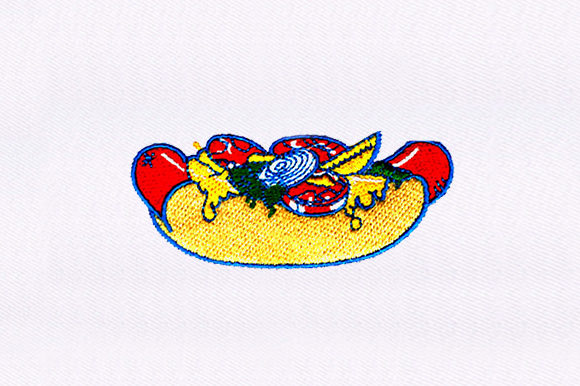
As an embroidery designer who has spent years digitizing files for small businesses, I approach every new machine embroidery design with a critical eye. It is not enough for a file to look cute on a screen; it must perform under the needle, withstand washing, and elevate the brand identity of the client using it. Today, I am reviewing the Mustard Laden Hot Dog Design, a playful food-themed asset that holds significant potential for boutique merchandise, café uniforms, and creative studio branding.
First Impressions: Visual Personality and Appeal
The first thing that strikes me about the Mustard Laden Hot Dog Design is its inherent friendliness. Food imagery in embroidery often walks a fine line between kitschy and professional. This design leans into a whimsical, handmade aesthetic that feels approachable rather than cheap. For brands in the culinary sector—such as food trucks, bakeries, or local diners—this visual tone builds immediate rapport with customers. It suggests a business that does not take itself too seriously but cares deeply about quality and comfort.
The title implies a focus on detail, specifically the condiment aspect, which offers excellent opportunities for thread color play. In a commercial setting, this design does not scream "corporate"; instead, it whispers "community." This distinction is vital for small business owners looking to differentiate themselves from large chains through custom apparel and branded goods.
Real-World Applications for Small Business Merch
When evaluating a digital embroidery file for commercial use, I always ask: where does this live best? The Mustard Laden Hot Dog Design is versatile, but it shines brightest in specific applications. Here is how I envision this design performing in a real business scenario:
- Staff Uniforms and Aprons: For a hot dog stand or casual eatery, placing this design on the chest pocket of a denim apron creates a cohesive team look. It adds personality to standard workwear without overwhelming the garment.
- Embroidered Patches: This is perhaps the strongest use case. An embroidered patch allows for high-density stitching and clean edges. Businesses can sew these onto tote bags, jackets, or hats, creating modular branding that customers love to collect.
- Tote Bag Design: Canvas totes are a staple of eco-friendly branding. The bold shapes typical of food illustrations translate well to textured fabric, making this a great candidate for reusable shopping bags sold at farmer’s markets or boutique shops.
- Cap Embroidery: A simplified version of this design could work beautifully on the front panel of a trucker hat or dad cap, serving as a subtle nod to the brand’s specialty.
For Etsy sellers and crafters, this design serves as a ready-made asset for creating niche products. Whether you are selling custom baby bibs, picnic blankets, or kitchen towels, the food theme resonates with buyers looking for unique, personalized gifts.
Technical Considerations and Stitch Density
While the aesthetic appeal is strong, the technical execution determines whether a design is a headache or a joy to stitch. Without seeing the specific stitch count, I advise caution regarding stitch density. Food designs often rely on solid fills to represent items like buns or sausages. If the density is too high, the fabric may pucker, especially on lighter materials like cotton t-shirts or linen aprons.
I recommend testing the Mustard Laden Hot Dog Design on a scrap piece of your intended fabric before running a full production batch. Pay close attention to the thread colors. Mustard yellow can be tricky; if the shade is too pale, it may disappear against light fabrics, while a neon yellow might look unnatural. Contrast is key. Ensure the outline stitches are distinct enough to define the shape clearly, even from a distance.
Another critical factor is the hoop size. Verify that the design fits comfortably within your machine’s maximum hoop dimensions. If you plan to create small patches, ensure the details do not become muddy when scaled down. Tiny lettering or intricate garnish details often get lost in small formats, so simplification might be necessary for miniature applications.
Navigating Fabric Texture and Stabilizer Choice
The success of any commercial embroidery project depends heavily on the interaction between the thread, the fabric, and the stabilizer. For the Mustard Laden Hot Dog Design, I suggest using a cut-away stabilizer for garments that will undergo frequent washing, such as staff uniforms. This provides long-term stability and prevents the design from distorting over time.
If you are embroidering on textured fabric, such as a thick canvas tote or a fuzzy fleece jacket, be aware that the texture can obscure fine details. In these cases, increasing the satin stitch width slightly can help the design pop. Always test on the actual material you intend to use for the finished product. A design that looks crisp on poly-cotton may behave differently on 100% organic cotton or denim.
Brand Identity and Customer Trust
Why does a simple food illustration matter for brand identity? Because consistency builds trust. When a customer sees the same high-quality Mustard Laden Hot Dog Design on your apron, your packaging, and your social media mockups, it reinforces professionalism. It signals that you have invested in your brand’s presentation.
For handmade product sellers, using a well-digitized file enhances the perceived value of the item. A sloppy embroidery job can detract from the charm of a handmade good, but a clean, precise stitch-out elevates it to a premium status. This design, when executed correctly, contributes to a cohesive visual story that engages buyers and encourages repeat business.
Practical Designer Notes for Production
Before you load this file into your machine, follow these steps to ensure a smooth production process:
- Check File Formats: The product description lists a wide range of formats including DST, PES, JEF, and XXX. Ensure you select the correct format for your specific embroidery machine to avoid conversion errors.
- Test in Black and White: Before committing to colorful threads, stitch the design out in black thread on white fabric. This helps you identify any spacing issues or unwanted jumps without the distraction of color.
- Review Commercial Licensing: Confirm the license terms associated with this digital embroidery file. Most designers allow commercial use for physical products, but restrictions may apply to mass production or digital resale.
- Create a Printable Mockup: Use design software to place the artwork on a photo of your intended garment. This helps visualize scale and placement before you waste thread and fabric.
- Inspect Spacing: Look closely at the transition areas between the hot dog and the mustard. Are there too many trims? Excessive trims can slow down production and increase the risk of thread breaks.
In conclusion, the Mustard Laden Hot Dog Design is a charming and viable option for small businesses in the food and lifestyle sectors. It offers a blend of playfulness and professionalism that, when paired with proper technical execution, can significantly enhance your brand’s merchandise. By paying attention to stabilizer choice, thread contrast, and fabric texture, you can transform this digital asset into a tangible symbol of your business’s quality and character.