Passenger Ship Redwork: A Designer’s Review
As an embroidery designer who spends countless hours digitizing and testing files, I have learned that not every machine embroidery design is created equal. Some are overly complex for their intended use, while others lack the structural integrity needed for commercial applications. Recently, I came across Passenger Ship Redwork on Creative Fabrica and decided to put it through its paces. This review is based on my experience evaluating this file for real-world projects, from custom apparel to handmade gifts.
First Impressions and Visual Mood
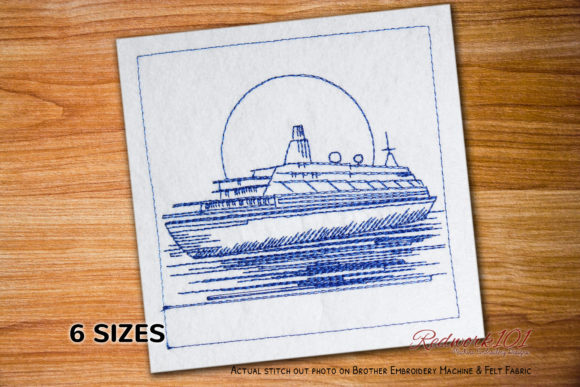
The immediate appeal of Passenger Ship Redwork lies in its nostalgic charm. The redwork style, traditionally associated with simple running stitches and monochromatic thread, evokes a sense of vintage maritime history. For those of us in the Transportation category of design, finding a motif that balances historical accuracy with decorative simplicity can be challenging. This design manages to capture the silhouette of a classic passenger liner without getting bogged down in excessive detail that might cause stitching issues.
The visual mood is clean and crisp. It does not rely on heavy fill stitch areas, which makes it an excellent candidate for beginners or for projects where you want to minimize thread consumption. The lines are deliberate, suggesting a focus on outline rather than saturation. This approach gives the design a breathable quality, allowing the fabric texture to show through, which is often preferred in modern handmade product aesthetics.
Practical Application in Real Projects
When I consider a new embroidery file, I always ask myself: "Where will this live?" For Passenger Ship Redwork, the versatility is surprising. Here is how I envision this design performing across various mediums:
- Tote Bag Design: The open nature of redwork works beautifully on canvas or cotton totes. It provides a focal point without making the bag stiff or heavy.
- Sweatshirt Embroidery: On fleece or French terry, this design avoids the puckering often caused by dense satin columns. It sits lightly on the fabric, maintaining the garment's drape.
- Kitchen Towels and Aprons: Redwork has deep roots in domestic textiles. Using this passenger ship motif on hemstitched towels creates a cohesive, vintage-inspired kitchen set.
- Embroidered Patch: If you plan to create iron-on or sew-on patches, ensure you check the stitch density. Since this is primarily outline-based, you may need to add a backing or adjust your stabilizer strategy to prevent fraying around the edges.
For Etsy sellers and small business owners, this design offers a unique angle. While nautical themes are common, the specific "passenger ship" angle taps into a love for travel history and ocean liners, which can differentiate your custom apparel from generic anchor or wheel designs.
Technical Considerations and Stitching Performance
One crucial detail mentioned in the product description is that "The Box Stitch shown in picture is optional." This is a significant feature for flexibility. It means you can choose to frame the ship or let it stand alone. However, it also requires attention during the setup phase. You must decide before hooping whether to include this border, as it affects the overall hoop size requirements.
The description also notes, "The color of outer Box is different color in most of the designs unless it is part of the design itself, you can skip the color directly in." This suggests that the file is structured with color stops that allow for easy customization. In practice, this means you can swap thread colors seamlessly if you are using multi-needle machines, or pause and change threads on single-needle home machines without disrupting the flow.
When working with this type of Creative Fabrica embroidery asset, keep the following technical notes in mind:
- Fabric Choice: Redwork relies on contrast. Use light-colored fabrics for traditional red thread, or experiment with white thread on dark navy linen for a striking reverse effect.
- Stabilizer Selection: Even though the design is not dense, proper stabilization is key. For woven fabrics like cotton or linen, a cut-away stabilizer ensures longevity, especially for items like tote bags that will bear weight.
- Test on Scrap Fabric: Always run a test stitch-out. Check for any jumps or loose threads at the start and end points. Verify that the optional box stitch aligns perfectly with the ship’s hull if you choose to include it.
- Thread Colors: Traditional redwork uses a single color, but don’t be afraid to experiment. A deep navy or charcoal grey can modernize the look for contemporary commercial embroidery clients.
Enhancing Product Value and Brand Consistency
Using high-quality design assets like Passenger Ship Redwork can significantly impact your brand perception. When customers see clean, well-executed stitching, it builds trust. This design’s simplicity allows for consistent reproduction, which is vital for scaling a handmade business. Whether you are creating a personalized gift for a cruise enthusiast or stocking up for a craft fair, the reliability of the file ensures that each finished product meets a high standard.
Furthermore, the aesthetic lends itself well to printable mockup creation. Because the design is distinct and not overly textured, it photographs well. You can easily showcase the embroidery on various backgrounds in your online store, helping potential buyers visualize the finished product in their homes or wardrobes.
Licensing and Final Verdict
Before launching any digital embroidery file into your production line, always review the licensing terms on the Creative Fabrica product page. Understanding whether you can sell physical items made with this design is crucial for commercial embroidery operations. Most Creative Fabrica designs come with a commercial license for physical goods, but confirming this protects your business.
In conclusion, Passenger Ship Redwork is a solid addition to any embroidery designer’s library. It bridges the gap between traditional craft and modern application. Its optional elements provide flexibility, and its low-density structure makes it forgiving on various fabrics. For those looking to expand their design assets with a touch of maritime elegance, this file is worth considering. Just remember to test, stabilize properly, and enjoy the process of bringing this classic vessel to life through Embroidery.