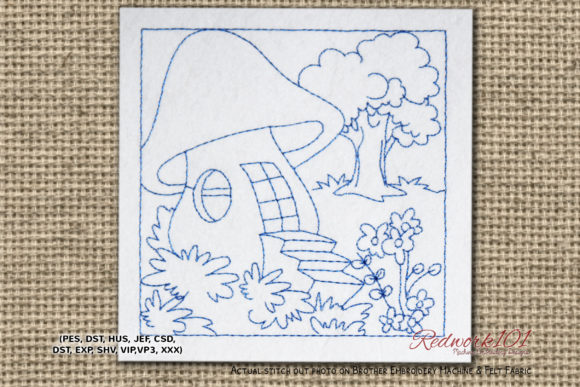
Forest with a Mushroom House Redwork Review
As an embroidery designer who spends more time staring at digitized stitch paths than I do sleeping, I am always on the hunt for designs that bridge the gap between whimsical charm and professional execution. When I recently browsed the Creative Fabrica embroidery library for my upcoming boutique apparel line, the Forest with a Mushroom House Redwork caught my eye. It sits squarely in the Fairy Tales category, but its application potential extends far beyond children’s wear. For those of us running small clothing brands or Etsy shops, finding a machine embroidery design that feels both trendy and timeless is crucial. Here is my honest review of how this piece performs in a real-world production environment.
Visual Personality and Stitching Mood
The first impression of the Forest with a Mushroom House Redwork is one of understated elegance. Unlike heavily saturated, multi-color designs that can look bulky on fabric, redwork relies on a single thread color to create depth through shading and texture. This particular design features a charming mushroom house nestled among forest elements, rendered in a way that feels rustic yet playful. The visual personality is not overly cute or juvenile; instead, it carries a cozy, cottage-core aesthetic that resonates with current fashion trends.
The stitching mood is calm and organic. Because redwork typically utilizes running stitches or simple fills, the design avoids the high stitch density that often causes puckering on lightweight fabrics. This makes it an excellent candidate for various garment types. The detail level is sufficient to be recognizable from a distance but delicate enough to feel premium up close. It strikes a balance between bold graphic impact and intricate handmade product quality.
Performance on Boutique Apparel
When planning a collection, versatility is key. I tested the concept of this embroidery file across several garment types to see where it shines brightest.
- Sweatshirt Embroidery: On neutral sweatshirts, such as oatmeal, sage green, or charcoal, the single-color thread pops beautifully. The simplicity of redwork prevents the design from getting lost in the fleece texture.
- Hoodie Design Placement: For a modern look, I recommend placing this on the left chest area. It serves as a subtle brand accent without overwhelming the garment. It also works well as a sleeve accent, adding a touch of whimsy to oversized hoodies.
- T-Shirt Embroidery: On cotton tees, ensure you use the correct stabilizer to prevent distortion. The design’s open nature allows the fabric breathability, making it comfortable for all-day wear.
- Tote Bag Design: This motif translates exceptionally well to canvas tote bags. The rustic forest theme aligns perfectly with eco-friendly branding and lifestyle product photos.
For dark garments, consider using a contrasting thread color like cream, gold, or soft pink instead of traditional red. This adaptability makes it a strong contender for commercial embroidery products where customization is a selling point.
Technical Considerations for Production
Before committing to a full production run, any experienced embroiderer knows the importance of technical due diligence. The product description notes that "The Box Stitch shown in picture is optional." This is a critical detail. It implies that the design may come with a bounding box or frame that can be toggled off. For apparel, you will almost certainly want to skip this outer box to maintain a clean, integrated look. Additionally, the description mentions that "The color of outer Box is different color in most of the designs unless it is part of the design itself, you can skip the colo[r]." This suggests flexibility in thread changes, but it also means you must carefully review the digital embroidery file in your software before hooping.
Here are my practical designer notes for working with this file:
- Test on Scrap Fabric: Always stitch out a test on the exact same material you plan to use for your final product. Fabric texture varies wildly between brands.
- Check Stabilizer Choice: For stretchy fabric like jersey knits or ribbed cuffs, a cut-away stabilizer is non-negotiable to prevent the design from warping after washing.
- Review Thread Color Contrast: Since this is redwork, your thread choice defines the entire look. Ensure high contrast against the background fabric for visibility.
- Confirm Hoop Size: While the design appears compact, verify the actual dimensions in your embroidery software to ensure it fits your intended placement, especially for small chest placements.
- Inspect Stitch Density: Check if the design has excessive jumps or dense fills that might cause needle breaks on thinner materials.
It is vital to check Creative Fabrica product details and licensing before selling finished apparel. Ensure the license covers commercial use for physical goods, which is standard for most designers on the platform, but always double-check to protect your boutique brand.
Enhancing Brand Identity and Value
Incorporating a design like Forest with a Mushroom House Redwork into your lineup does more than just decorate a garment; it builds brand identity. For an Etsy seller or small shop product, consistency is trust. Using a cohesive theme across your collection—such as a series of fairy tale-inspired redwork pieces—creates visual consistency that customers recognize. This recognition drives customer engagement and encourages repeat purchases.
Furthermore, the perceived value of embroidered items is significantly higher than printed ones. A well-executed custom apparel piece with clean stitching and thoughtful placement signals quality. When you pair this design with high-quality blanks and present it through professional printable mockup images or lifestyle product photos, you elevate the perceived worth of the item. Buyers are not just purchasing a hoodie; they are buying into a narrative of craftsmanship and whimsical comfort.
Final Verdict for Creative Entrepreneurs
The Forest with a Mushroom House Redwork is a versatile asset for any embroidery designer’s library. It avoids the pitfalls of overly complex designs that struggle on difficult fabrics while offering enough character to stand out in a crowded market. Whether you are creating cozy seasonal outfits, denim jackets with back designs, or minimalist t-shirts, this Embroidery pattern offers a reliable foundation.
Remember, the key to success lies in the preparation. Confirm those missing details like specific file formats and machine compatibility if they are not explicitly listed, and always prioritize a test stitch. By treating this machine embroidery design with the respect it deserves, you can create finished products that not only sell well but also bring joy to your customers. For creative entrepreneurs looking to expand their Fairy Tales collection with something grounded and stylish, this design is a worthy addition to your next project.