Review: Boy Sitting with Fishing Pole Redwork
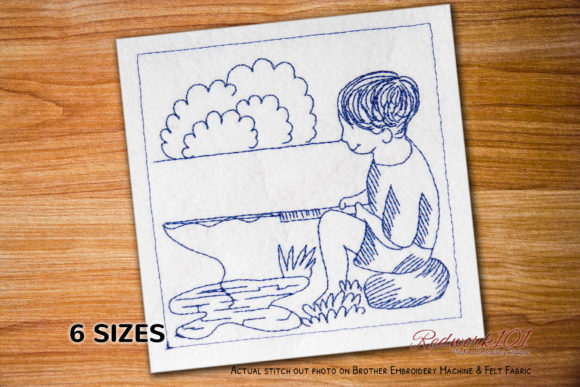
As an embroidery designer who has spent countless weekends behind a craft fair booth, I have learned that not every machine embroidery design translates into a bestseller. Some designs are technically impressive but fail to catch the eye of a passing customer. Others are simple, charming, and practically sell themselves. Today, I am reviewing the Boy Sitting with Fishing Pole Redwork from the perspective of a maker preparing for a busy market season. This piece falls squarely into the Camping and outdoor lifestyle niche, a category that remains perennially popular for handmade goods.
First Impressions and Aesthetic Appeal
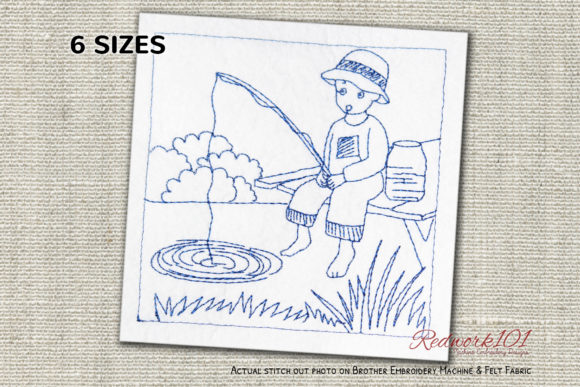
The first thing that strikes me about this design is its simplicity. Redwork, by definition, relies on single-color stitching, usually in red, against a neutral background. This creates a high-contrast, vintage farmhouse look that appeals to a wide demographic. The silhouette of a boy sitting with a fishing pole evokes nostalgia, patience, and the quiet joy of nature. It feels rustic, soft, and decidedly traditional.
For a craft fair seller, this aesthetic is gold. It fits seamlessly into booths featuring home decor, kitchen linens, and children’s items. The design does not scream for attention with neon colors or complex shading; instead, it invites closer inspection. It feels like a story told in thread. When evaluating this as a craft fair product, I see immediate potential for it to serve as a focal point on larger items or a charming accent on smaller goods.
Product Versatility and Market Fit
One of the most critical questions I ask before digitizing or purchasing a new embroidery file is: "Where will this live?" The Boy Sitting with Fishing Pole Redwork is incredibly versatile. Here is how I envision it performing across different product lines:
- Tote Bags and Market Bags: This is perhaps the strongest application. A natural canvas tote with this redwork design centered on the front is a classic tote bag design. It appeals to parents, grandparents, and anyone who loves the outdoors. The simplicity ensures it reads well from a distance.
- Kitchen Linens: Tea towels and aprons are staple sellers. For tea towel embroidery, the red thread pops beautifully against white or cream linen. An apron embroidery project using this design could target fathers or grandfathers, making it a perfect gift item for holidays.
- Embroidered Patches: If you offer custom patches, this silhouette works well as an iron-on or sew-on badge for camping gear. It adds a personalized touch to jackets or backpacks without overwhelming the garment.
- Pillow Covers and Home Decor: On a neutral pillow cover, this design adds a touch of whimsical charm. It fits well in nurseries or cabins, reinforcing the Camping theme without being overly literal.
For Etsy sellers and digital shop owners, this design offers excellent opportunities for printable mockup creation. The clean lines photograph well, allowing you to create compelling listing images that highlight the texture of the stitch against the fabric.
Production Practicality and Batch Selling
From a production standpoint, redwork designs are often a dream for small shop owners. They typically have lower stitch density compared to full-fill designs, which means faster run times on your machine. This is crucial when you need to produce inventory in bulk for a weekend market. The Boy Sitting with Fishing Pole Redwork appears to be a line-art style design, which minimizes thread breaks and reduces the need for frequent trimming.
However, there are practical considerations. The description notes that "The Box Stitch shown in picture is optional." This is a vital detail. In a busy booth, customers often prefer clean edges. If the box stitch is merely a placement guide, I recommend skipping it for the final finished product unless it adds structural value to the item. Additionally, the note states, "The color of outer Box is different color in most of the designs unless it is part of the design itself, you can skip the col." This implies that you must carefully review your software settings to ensure no unwanted outline stitches appear. Cleanliness is key to perceived quality.
Technical Considerations for Best Results
To ensure this design looks premium and professional, you must pay attention to several technical factors. As an experienced designer, I advise the following steps before committing to a large batch:
- Fabric Selection: Redwork relies on contrast. Use light-colored fabrics like white, cream, or light gray. Avoid dark fabrics unless you change the thread color, but remember that redwork traditionally uses red thread. The fabric texture matters too; tight-weave cotton or linen works best to prevent puckering.
- Stabilizer Choice: Even with low-density designs, proper stabilization is non-negotiable. Use a cut-away stabilizer for stretchy fabrics like tote bags and a tear-away for stable wovens like tea towels. This ensures the design remains crisp after washing.
- Hoop Size and Placement: Check the required hoop size for this specific file. While the design may be small enough for a 4x4 hoop, centering it correctly on larger items like aprons requires careful measurement. Misaligned embroidery looks amateurish and hurts sales.
- Thread Contrast: Use a high-quality rayon or polyester thread in a true red. Cheap thread can look dull or bleed during washing, ruining the handmade product appeal. Test wash your samples to ensure colorfastness.
Be cautious with tiny details. If the fishing pole or the boy’s features are very fine, they may get lost on textured towels or if the needle is too large. Always test the design on scrap fabric identical to your production material. This step saves time and money by preventing costly mistakes.
Boosting Brand Consistency and Buyer Engagement
Incorporating the Boy Sitting with Fishing Pole Redwork into your lineup can strengthen your brand identity if you specialize in rustic, outdoor, or family-oriented themes. It signals to customers that you value tradition and quality. When displayed in a booth, group these items together. Place the embroidered tote next to a matching tea towel and a patch. This creates a cohesive visual story that encourages multiple purchases.
For online listings, use the design’s narrative power. Describe the feeling of a quiet day by the lake. Use keywords like "rustic home decor," "camping gift," and "vintage style embroidery" to attract the right buyers. As a digital embroidery file provider, ensure your listing clearly states whether the box stitch is included or optional, and provide clear instructions on how to remove it if desired. Transparency builds trust with fellow commercial embroidery professionals and hobbyists alike.
Ultimately, this design is a strong contender for any maker’s portfolio. It is simple enough to produce efficiently yet charming enough to resonate emotionally with buyers. By paying attention to fabric choice, stabilization, and presentation, you can turn this single design asset into a consistent revenue stream for your small business. Remember to verify all licensing terms before selling finished products, ensuring you are compliant with the creator’s usage rights. With careful execution, the Boy Sitting with Fishing Pole Redwork can become a staple in your small shop product lineup.