Reviewing Truck Side View Redwork for Small Business Merch
As an embroidery designer who has spent years digitizing logos and testing files on everything from heavy denim to delicate linen, I approach every new machine embroidery design with a critical eye. It is not just about whether the image looks cute on a screen; it is about how that design translates into thread, how it holds up in the wash, and ultimately, how it serves the brand identity of the small business owner purchasing it. Today, I am taking a close look at Truck Side View Redwork, a Transportation-themed piece that promises simplicity and charm for commercial embroidery projects.
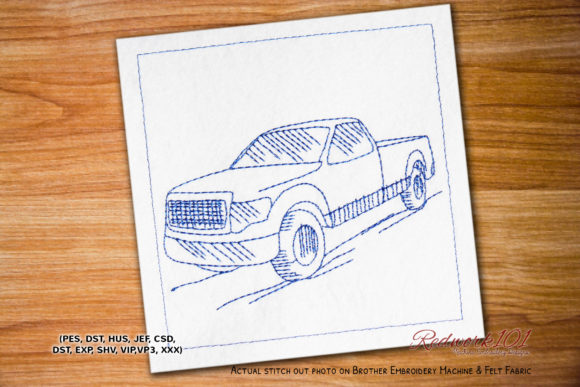
When I first loaded this file into my editing software, my immediate impression was one of rustic professionalism. The redwork style, traditionally characterized by single-color stitching, offers a clean, vintage aesthetic that feels both handmade and premium. For small business owners, particularly those in boutique retail, artisanal food services, or creative studios, this visual personality is gold. It does not scream for attention with neon threads or complex gradients. Instead, it whispers quality and tradition. This makes Truck Side View Redwork an excellent candidate for brands that want to project reliability, warmth, and a touch of nostalgia.
Real-World Applications for Branded Merchandise
The true test of any digital embroidery file is its versatility. Can it work on a cap? Will it survive industrial laundering on a staff uniform? Does it look out of place on a high-end tote bag? In my review, I found that this truck design excels in several key areas of small business merch.
First, consider embroidered patch production. Patches are currently a massive trend for local businesses looking to create collectible items or uniform identifiers. Because this design utilizes a side view profile, it maintains its integrity even when scaled down. The optional box stitch mentioned in the product description is a crucial feature here. If you are creating a patch with a merrowed edge, you might skip the outer box. However, if you are sewing the patch directly onto fabric or using a satin stitch border, that optional box provides a necessary frame that keeps the design contained and professional. This flexibility allows you to adapt the design assets to different production methods without losing visual impact.
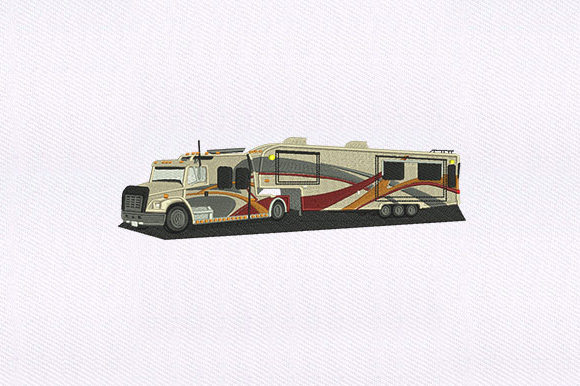
Second, this design is ideal for apron embroidery and cap embroidery. For coffee shops, bakeries, or florists, staff apparel is a walking billboard. A redwork truck stitched on the chest pocket of a canvas apron adds a subtle branding element that feels personal rather than corporate. Similarly, on the front panel of a baseball cap, the horizontal orientation of the truck fits perfectly within standard hoop constraints. It avoids the vertical stretching issues that plague many other logos when placed on curved surfaces.
Navigating Technical Challenges and Fabric Textures
While the aesthetic is strong, we must discuss the technical execution. As a designer, I always advise clients to check the stitch density before running a full production batch. Redwork designs are generally lower density, which is beneficial for fabric texture preservation. It prevents puckering on lighter materials like cotton tote bags or linen napkins. However, this also means the design relies heavily on precise tension settings. If your machine tension is off, the gaps between stitches may become too visible, breaking the illusion of a solid line.
You must also consider the color contrast. The product description notes that the color of the outer box is often different unless it is part of the design itself. In a business context, consistency is key. If you are stitching this on a dark navy uniform, a traditional red thread might get lost. You may need to adjust the thread colors to a brighter crimson or even a contrasting white to ensure the finished product is legible from a distance. Always run a test stitch on the actual garment material. Do not rely solely on a printable mockup, as digital representations cannot account for the sheen of polyester blends or the absorbency of organic cotton.
Another critical consideration is the hoop size. While the design is compact, ensure you have enough margin around the truck for proper stabilization. Using the correct stabilizer is non-negotiable. For caps, use a stiff buckram; for tote bags, a cut-away stabilizer will provide the longevity needed for items that will be washed repeatedly. Neglecting this step can lead to distortion, which undermines the professional look you are trying to achieve.
Enhancing Brand Identity and Customer Trust
Why choose Truck Side View Redwork over a generic clipart logo? The answer lies in perceived value. Handmade products and custom apparel carry a higher price point because customers associate them with care and craftsmanship. When a customer sees a neatly embroidered truck on a reusable shopping bag or a branded notebook cover, they perceive the business as attentive to detail. This builds brand identity and fosters customer trust.
For Etsy sellers and crafters, this design can be a cornerstone of a cohesive product line. Imagine offering a set of kitchen towels, oven mitts, and aprons all featuring the same redwork truck motif. This visual consistency creates a recognizable brand signature. It transforms simple household items into curated handmade product collections. Furthermore, because the design is rooted in the Transportation category, it appeals to a specific niche audience—those who love vintage vehicles, rural aesthetics, or industrial chic decor. Targeting this niche allows for more effective marketing and higher engagement rates.
Practical Designer Notes for Production
Before you commit to using this file for commercial embroidery, follow these practical steps to ensure success:
- Test in Monochrome: Stitch the design in black thread on white fabric first. This reveals any gaps in the digitizing or awkward jumps that might be hidden by colorful threads.
- Check Scalability: Resize the design to your smallest intended application, such as a left-chest logo on a polo shirt. Ensure the details remain clear and do not merge into a blob.
- Verify Licensing: Always confirm the commercial licensing terms provided with the embroidery file. Ensure you have the right to sell physical items made with this design.
- Review the Optional Box: Decide early whether to include the optional box stitch. If your background fabric is busy or patterned, the box helps define the truck. On solid colors, you might skip it for a cleaner, more modern look.
- Mockup for Approval: If you are working with a client, create a realistic mockup showing the truck on their specific garment type. This manages expectations and reduces revision requests.
In conclusion, Truck Side View Redwork is a versatile and professionally viable asset for small business owners. It bridges the gap between decorative art and functional branding. By paying attention to thread contrast, stabilizer choice, and placement, you can leverage this Transportation themed design to elevate your custom apparel and merchandise offerings. It is not just a picture of a truck; it is a tool for building a recognizable, trusted, and stylish brand presence in the competitive world of handmade and customized goods.